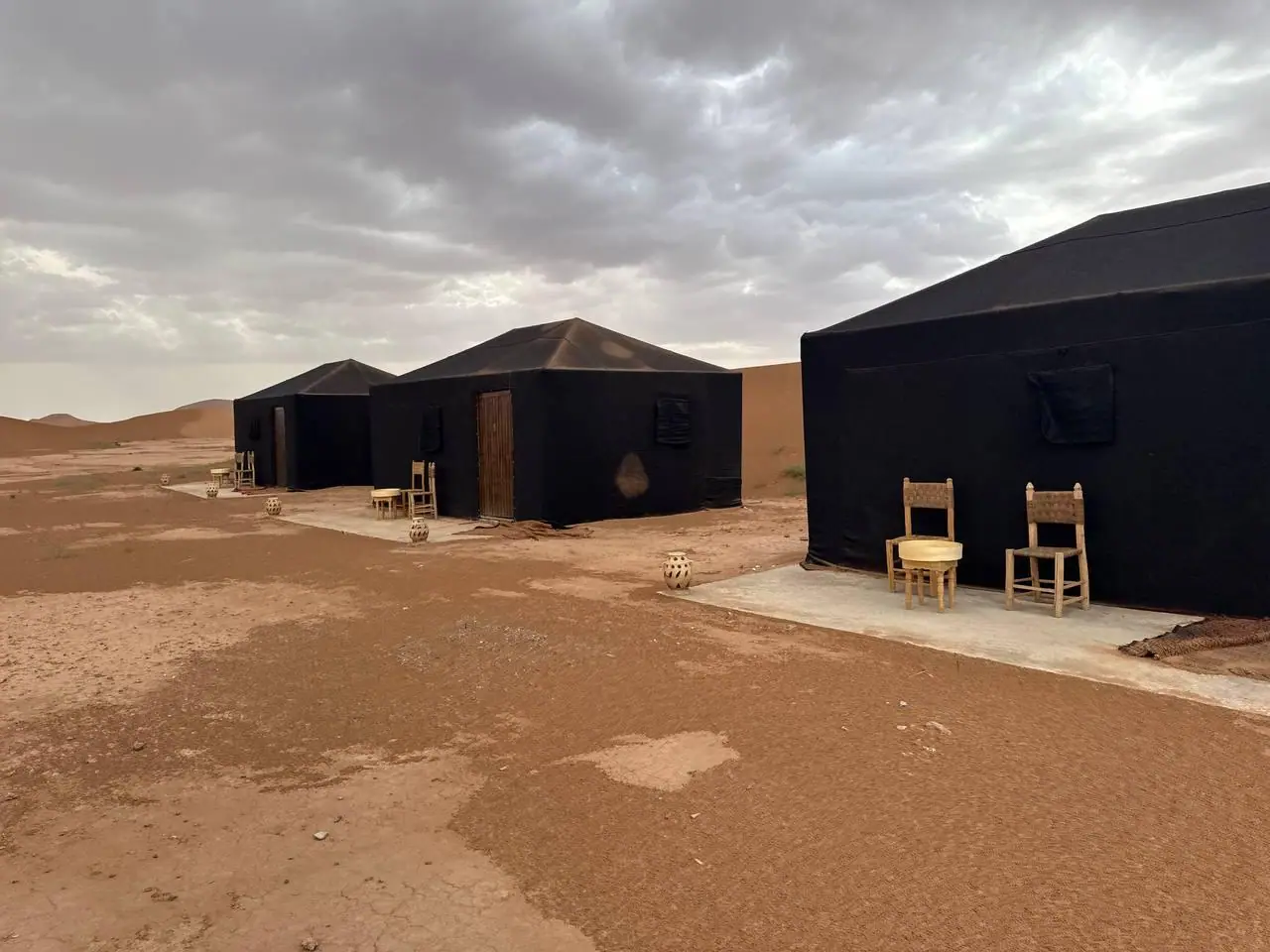
 Tourfrom€260
Chigaga the slow way, 3 days
Fossil ground, a sunset at Titanic Iriki, a nomad school, then camels and music among the dunes.
Camel ride included
Foum Zguid · Sahara
The Sahara desert in Morocco is far more than dunes: rock plateaus, gravel plains, a vast dry lake and palm gardens come first. Here is how each one appears on a trip south of the Jebel Bani.
In short
The Moroccan Sahara begins just south of the Jebel Bani ridge at Foum Zguid, an oasis town on the N12 road that links Tata with Zagora. Beyond it, private 4×4 trips cross Iriki National Park and the salt crust of Lake Iriki to Erg Chigaga, Morocco’s largest erg. Trips last from one day to a week, from €80 per person.
With roughly 9.2 million square kilometres, the Sahara is the largest hot desert on Earth, and its north-western fringe covers part of southern Morocco. Travellers often picture a single sweep of dunes. The reality around Foum Zguid is layered, and that is what makes a Morocco Sahara tour from here worth the drive.
Foum Zguid takes its name from the Zguid river – foum is Arabic for mouth – and stands about 760 m above sea level, right under the long rock wall of the Jebel Bani. Cross that ridge heading south and the tarmac soon gives way to tracks. Ahead lie Iriki National Park, the chalky basin of the lake and, on the far side, the sand mountains of Erg Chigaga. Nothing here is fenced or signposted: you travel with someone who knows the ground, in a 4×4 or beside a camel caravan.
This page explains the landscapes you actually meet in the Sahara desert in Morocco, then how the business’s trips are built around them. For the dunes themselves, see the guide to Erg Chigaga and its camps.
Geographers have names for the surfaces of a desert, and on a single day out of Foum Zguid you can tick off most of them. The majority of the Sahara is hamada – bare rocky plateau – rather than sand. Dunes are the exception, which is why a true erg feels so striking when it finally appears on the horizon.
| Surface | What it looks like | Where you meet it |
|---|---|---|
| Hamada | High, hard rock plateaus swept clean of sand by the wind | Flat-topped hills and table mountains on the tracks south of Foum Zguid and around Laarjimia |
| Reg | Gravel and stone plains, sometimes dotted with acacia | On the run from the ridge down to the lake, inside the national park |
| Dry lake bed | A white, cracked crust, dead flat to the horizon | Lake Iriki, crossed by most trips to the dunes |
| Erg | A sand sea: wind-built dunes covering a large area | Chigaga, plus smaller ergs such as El Mhazil and El Ghoule |
| Oasis | Date palms, gardens and water in the middle of dry land | Foum Zguid, Laarjimia, El Grisim, Tissint |
An erg, strictly speaking, is a desert area holding more than 125 km² of wind-blown sand. Erg Chigaga far exceeds that: it stretches for some 35–40 km and is around 15 km across; the typical dune rises 60–80 m, and a few climb higher. Its western edge touches Lake Iriki, which is why the two are so often visited together.
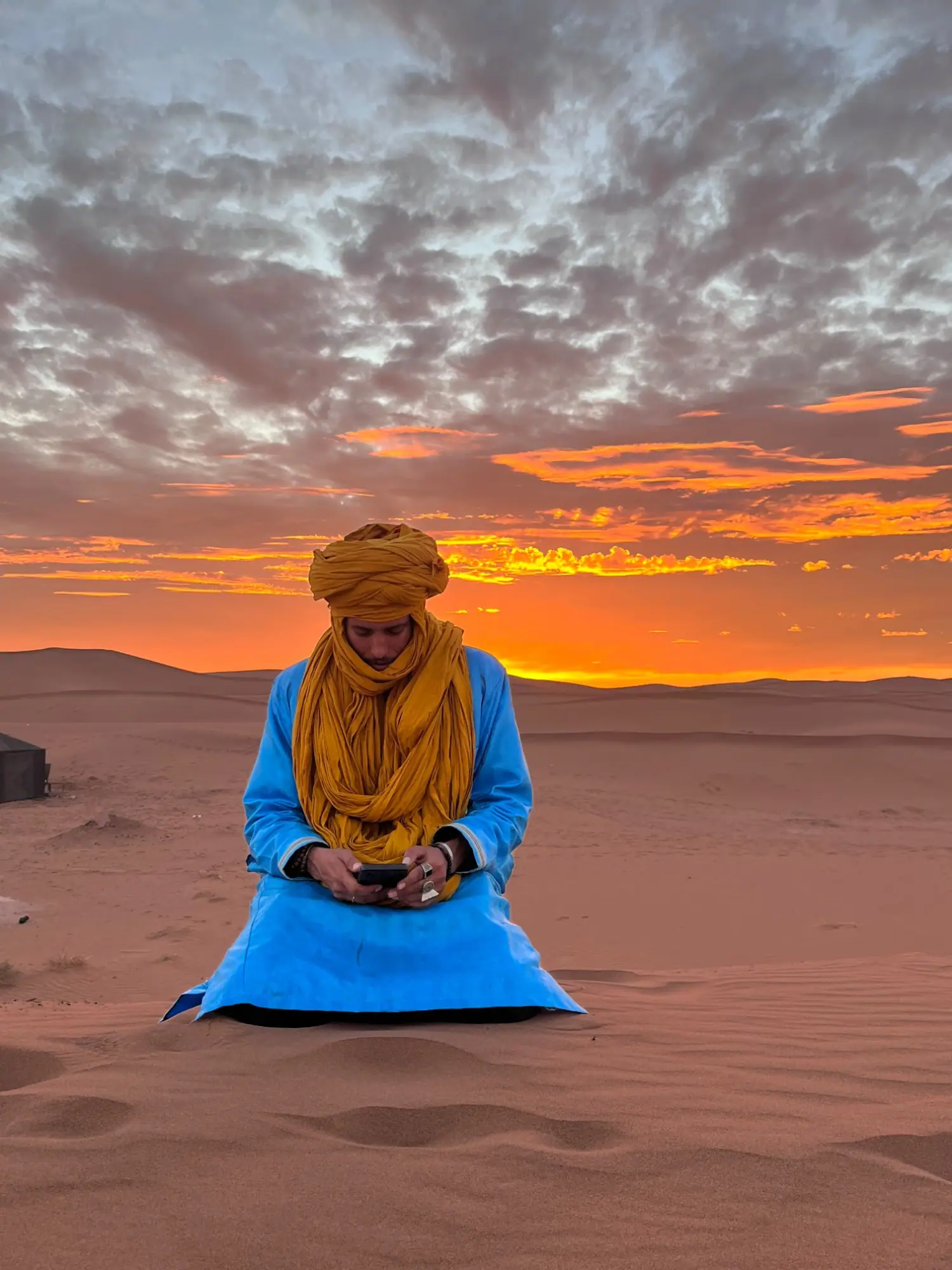
All trips run as private departures – your group has the vehicle, the guide and the programme to itself – and you settle the route and the price together on WhatsApp before anything is booked. Abdul, the local guide, is the person travellers mention in their Google reviews for his explanations and his humour.
The three families of trips are gathered on the multi-day desert circuits page, the excursions and one-night camps from Foum Zguid page and the desert treks with camels page.
Distance is the main constraint. Reaching the Chigaga sand from Foum Zguid means roughly 2.5–3 hours on the piste each way, so the shape of your trip depends on how much time you can spare.
Full figures, trip by trip, are on the desert tour prices page.
Nobody should imagine this land as empty. A few families still live inside the national park, where the Iriki basin is their main pasture. Several programmes include a stop at a nomad school or tea with a nomad family, always arranged around the community’s own calendar rather than the tourist timetable.
Water decides where people settle. Foum Zguid’s palms grow where the Zguid river meets the Jebel Bani; at Tissint, about an hour towards Tata, salty water runs over rock in a string of cascades, and caravans once came for it. Deeper in the desert, El Grisim is the oasis where trekkers watch sand bread being made and learn the ritual of pouring tea. These stops are the human side of a Sahara desert Morocco journey, and many travellers remember them as clearly as the dunes.
Travel is most pleasant between October and April. In high summer the thermometer regularly climbs beyond 40 °C; in midwinter the camp can sit near 0 °C after dark, and spring can bring wind and sand. The month-by-month guide to the desert season goes into detail and covers packing.
If you want to start from the town itself, the Foum Zguid travel notes cover the roads in and what is worth an hour in town before heading south.
Tourfrom€260Fossil ground, a sunset at Titanic Iriki, a nomad school, then camels and music among the dunes.
Camel ride included
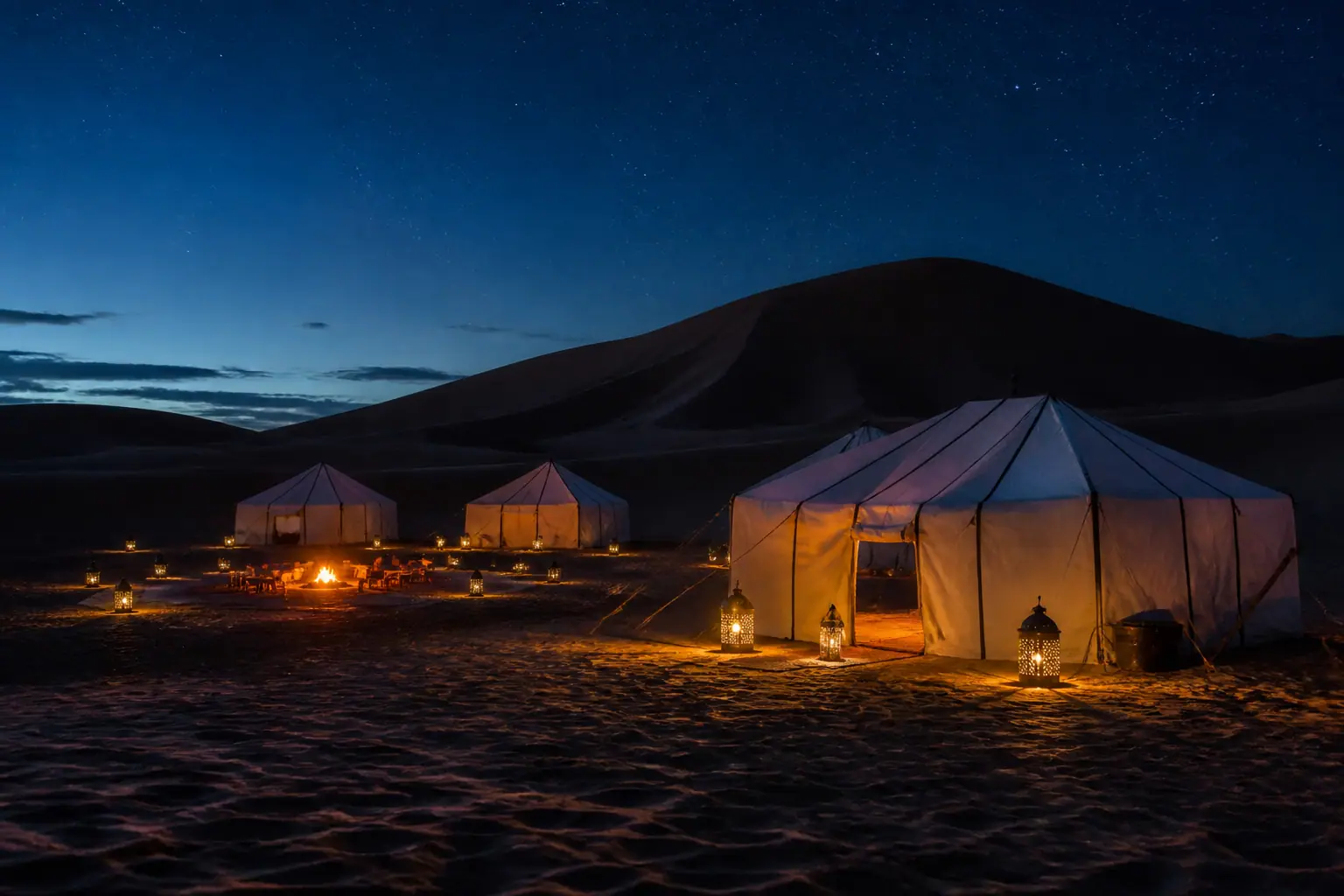 Tourfrom€380
A day off in the Chigaga sand, the near-empty El Mhazil dunes and engraved rocks below the Jebel Bani.
Camel ride included
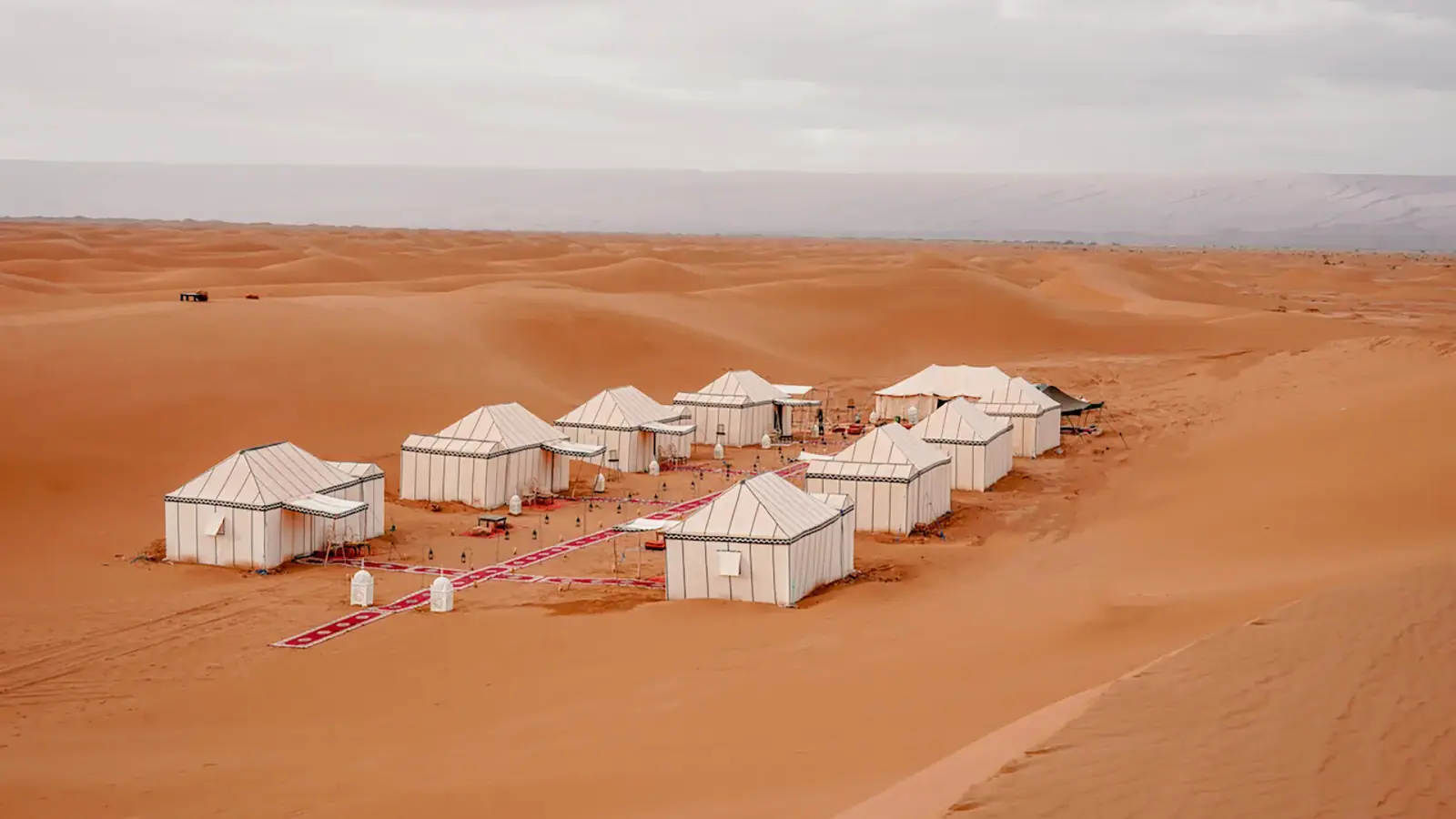 Excursionfrom€140
The flat Iriki basin, dusk from a camel’s back, a fireside supper, then nomad-style beds among the dunes.
Camel ride included
 Trekfrom€640
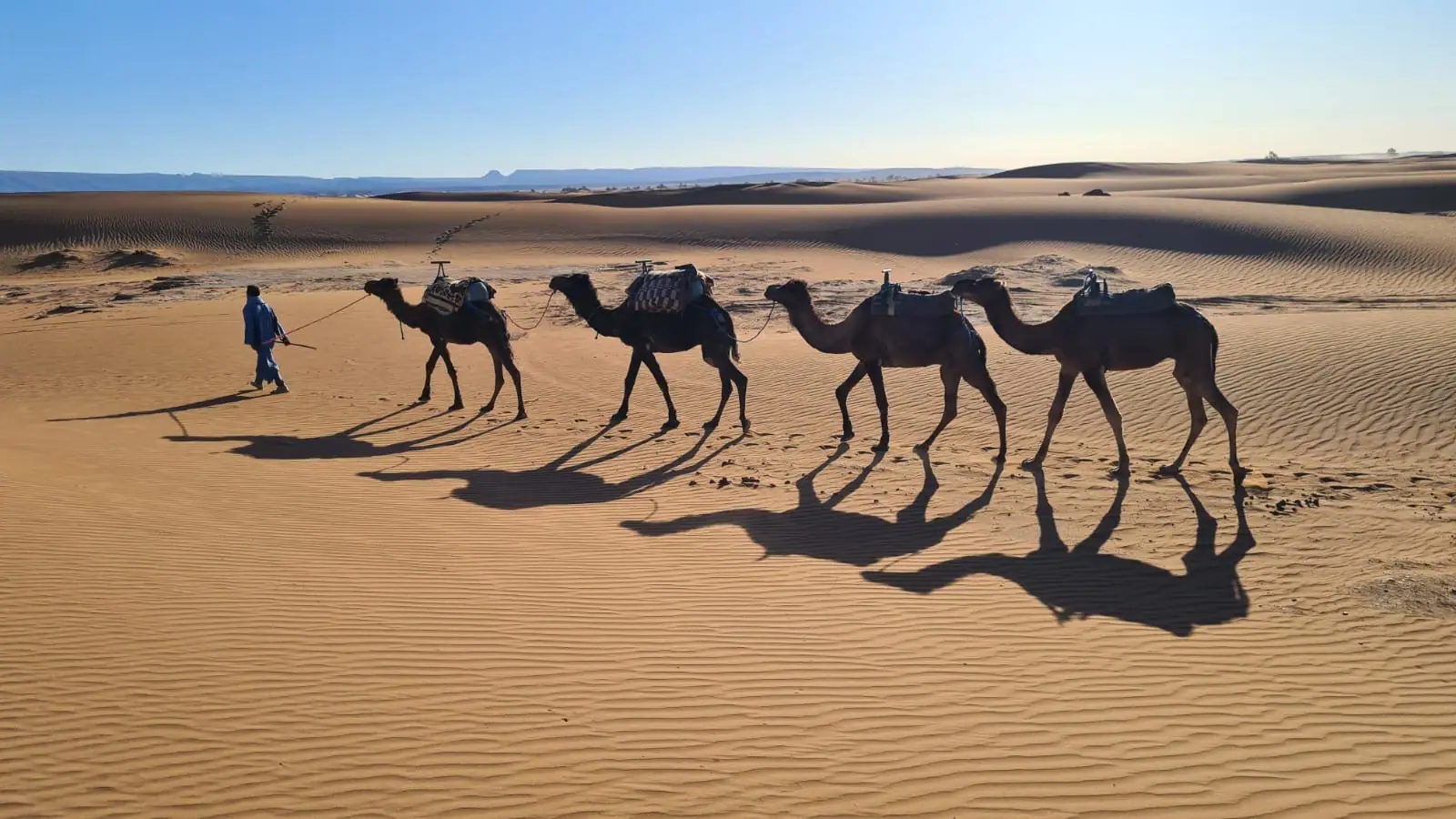
A riad night, sand-baked bread under the palms, then three walking days into Chigaga and El Ghoule.
With camel caravan
Yes. The Sahara extends into southern Morocco, and the land beyond the Jebel Bani belongs to it: stony plateaus, gravel plains, Lake Iriki’s salt crust and the Chigaga sand sea. It is the north-western edge of the desert, which is why you still find oases and nomad grazing land between the dunes.
Starting in Foum Zguid, a single day covers Lake Iriki, or gets you to the Chigaga sand and back. Two days give you sunset, a night at camp and sunrise. From Marrakech or Agadir, allow at least three days, because the drive to Foum Zguid alone fills the first day.
The day trips from Foum Zguid start at €80 per person: the Titanic Iriki lunch trip on the salt plain, or the Laarjimia oasis. A night at the dunes starts at €120 per person with the two-day trip to the Lamhazil dunes. Prices are published for two travellers and confirmed for your dates before booking.
No. Inside Iriki National Park a four-wheel-drive vehicle is compulsory, the pistes are unmarked and the lake bed can be soft after rain. Every trip comes with a private vehicle and a driver who guides, or with a caravan on the treks, so you never have to drive the desert yourself.
It depends on the trip. A camel ride is included on the Erg Chigaga camps and circuits, optional on the Erg El Mhazil and two-day Foum Zguid trips, and part of the logistics on treks, where the animals take the bags and you go on foot. The Lake Iriki, Laarjimia and Tissint day trips are 4×4 outings.
July and August are the hardest months, with daytime heat often above 40 °C. On some circuits the dune night may then be swapped for a night at the oasis. October to April is the usual season; early mornings and evenings are pleasant even in late spring, and winter brings cold nights.
Booking
Send your dates, the number of travellers and the trip you like. Abdul replies with the programme and the price; nothing is booked until you agree.
WhatsApp+212 649 598 615