 Excursionfrom€90
Laarjimia palm oasis day
Ochre ridges, a tajine-shaped peak and a long lunch in the shade of date palms.
Jebel Bani · Palm gardens
The Foum Zguid oases are farmed gardens kept green by groundwater at the foot of the Jebel Bani. How they work, what threatens them and which of our trips lead you into their shade.
In short
The oases near Foum Zguid are cultivated palm gardens watered from underground: the town’s own palm grove, the Allogoum ksar 25 km to the north, and remoter gardens such as Laarjimia inside Iriki park. A private day trip to Laarjimia costs from €90 per person; longer trips reach El Grisim and a nomads’ oasis.
Coming down the Zguid valley, the first sign of town is a dark band of palms against the brown flanks of the Jebel Bani. That band is not wild growth. An oasis is a vegetated patch of desert created by people for farming, and the Foum Zguid oases follow the rule: each tree is there because somebody planted it and keeps it watered.
Walk into one and you will notice the garden is built in three storeys:
The water comes from below ground, and much of it is often fossil water stored long ago, which means heavy use can run it dry. A traditional way of tapping it is the khettara, an underground gallery that carries water to the fields by gravity alone.
Three pressures weigh on the oases of this part of Morocco:
None of this shows in one afternoon, but it is why a visitor’s best contribution is to keep to the paths and leave the crops alone.
The Foum Zguid palm grove spreads along the river where it breaks through the Jebel Bani, with the remains of an old kasbah among the gardens. The regional tourist board counts Foum Zguid and Allogoum as two oases at the foot of that ridge.
More in the Foum Zguid town guide and our page on the desert around Foum Zguid.
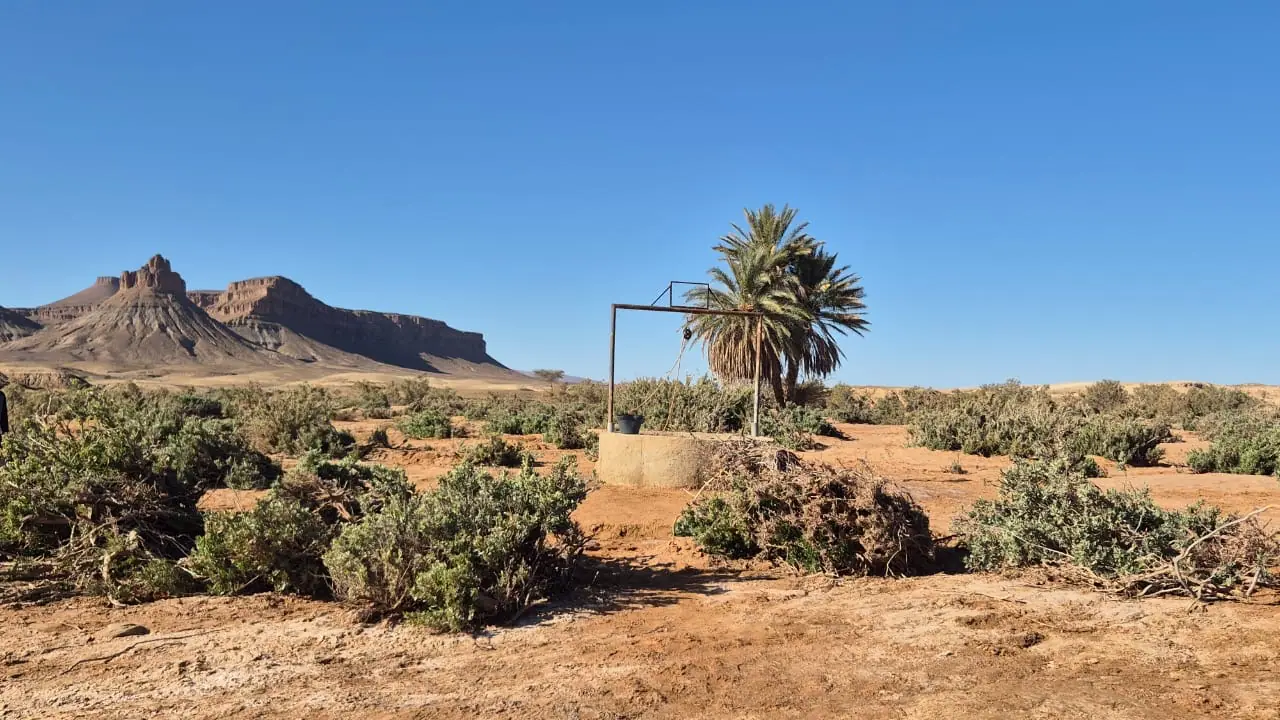
The Laarjimia oasis is the goal of our greenest outing. The private Laarjimia day trip (from €90 per person, from two travellers) leaves Foum Zguid by 4×4 for about 25 km of track over the ochre hills and flat-topped mountains of Iriki National Park. Along the way you pass Djbel Madouar El Kbir, the summit shaped like the cone of a tajine.
At the oasis the pace drops:
Bring shoes with a firm grip, since the oasis paths and the slopes above are uneven. The park you cross is described in our guide to Lake Iriki and Iriki National Park.
These programmes stop at an oasis; prices are per person:
| Oasis | What the programme includes | Trip | From |
|---|---|---|---|
| Laarjimia | Track through Iriki park, palm walk, lunch over a wood fire | Laarjimia day | €90 |
| Laajamiya | Lunch on day two, after Zaouit Sidi Abdennabi and a visit to a nomad family | Two days with fossils and Erg Lamhazil | €130 (€110 each from four travellers) |
| Foum Zguid palm grove | You set off on foot from the palms, the caravan loaded with the bags | Three days walking to Erg El Mhazil | €240 |
| A nomads’ oasis | Walking in, then tea shared with the nomads | Four-day Iriki park trek | €310 |
| An oasis on the way west | A stop on the tracks between Erg Chigaga and Erg El Mhazil | Four-day grand desert tour | €390 |
| El Grisim | Sand bread and tea, then a night at the desert camp | Six days from the oasis to Erg Chigaga | €650 |
| El Grisim | Sand bread, the tea ritual, a night beneath the palms | Five-day trek through the dunes | €650 |
| El Grisim | The role of oases explained, sand bread, a night under the palms | Seven-day crossing from Agadir | €750 |
On the treks the caravan’s camels carry the bags as you walk, and you can ask to ride for part of a stage. For camp nights, see our guide to a night in the desert; for the sand seas beyond, the Erg Chigaga and Erg Lmhazil pages.
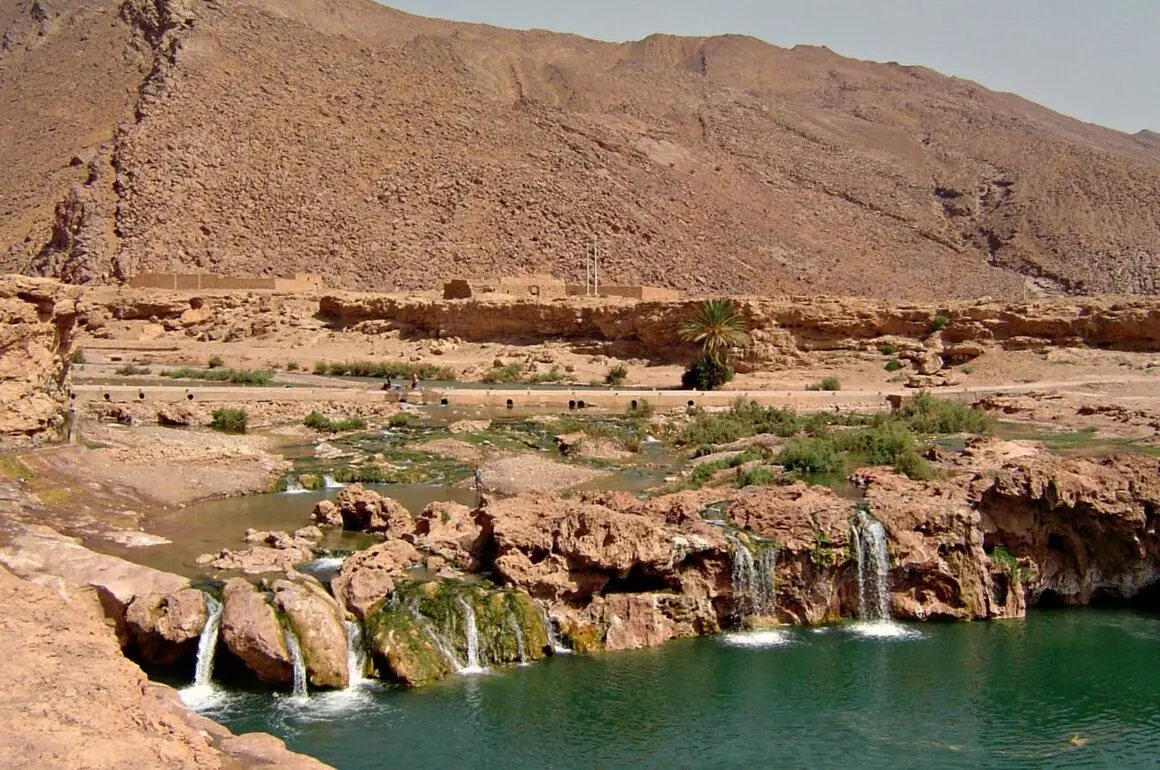
About an hour west along the N12, Tissint has a salty river that tumbles over rock into bathing pools, visited on our Tissint day trip (from €100). Our Tissint guide covers the cascades, the old ksar and the meteorite.
Whichever garden you walk into, a few habits go a long way:
Garden walks are kinder outside the hottest months (see when to go); then send your dates through the booking page.
Excursionfrom€90Ochre ridges, a tajine-shaped peak and a long lunch in the shade of date palms.
 Excursionfrom€130
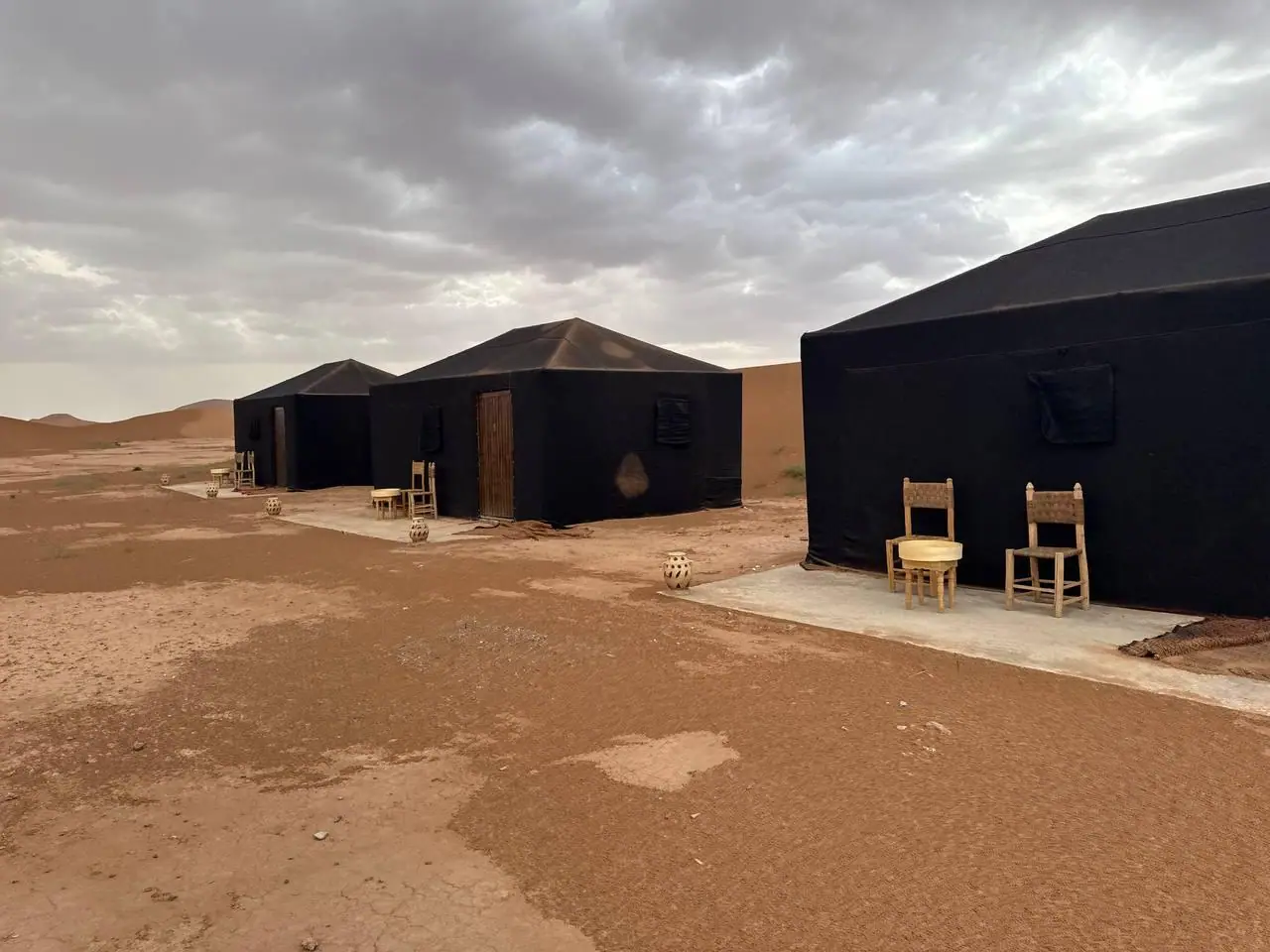
Fossil shells, a dune camp at Lamhazil, a nomad household and an oasis lunch.
Camel ride optional
 Excursionfrom€100
A salty river falling into pools, a narrow canyon and tafernoute bread warm for lunch.
 Trekfrom€650
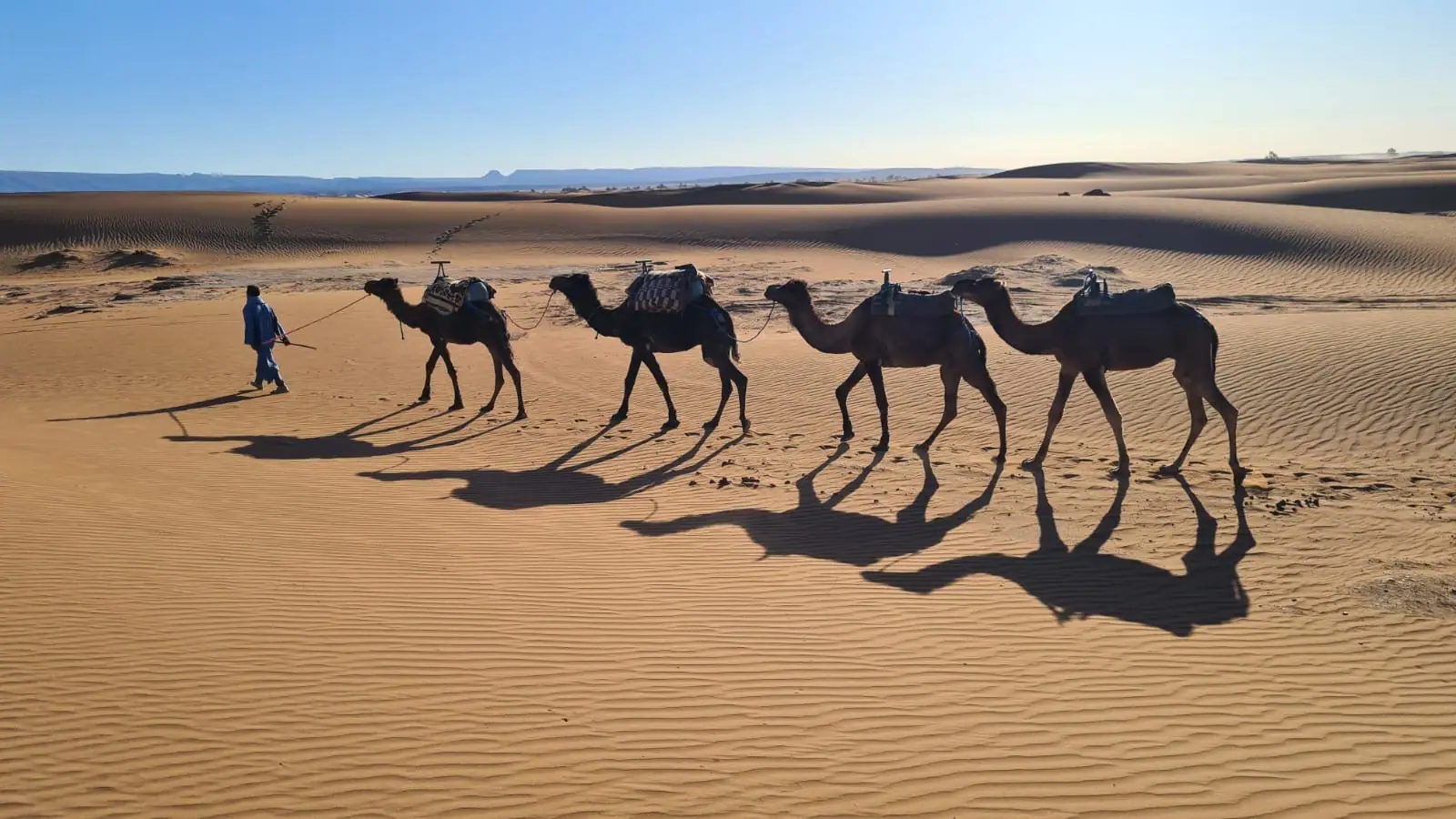
A riad night, sand-baked bread under the palms, then three walking days into Chigaga and El Ghoule.
With camel caravan
A green, cultivated area in the desert, created and maintained by people for farming. In a typical palm garden, date palms form the top layer, fruit trees grow beneath them and vegetables, fodder or cereals fill the ground below. The water usually comes from underground and is often fossil, so it has to be used sparingly.
The town’s own palm grove is on your doorstep, and the Allogoum ksar lies about 25 km to the north. With us, the Laarjimia day trip (from €90) crosses Iriki park to a remote palm garden, while the Tissint outing (from €100) heads west to the salt-water falls.
An underground channel that drains groundwater and carries it to the fields by gravity, with vertical shafts dug at regular intervals along its length, so no pump is needed. It is related to the qanat and the foggara. Today the technique is in decline.
Return transport by 4×4 from Foum Zguid, a local guide and a traditional lunch cooked under the palms. You drive about 25 km of track past table mountains, walk in the oasis and may climb a nearby hill. It costs from €90 per person, from two travellers; travel insurance and personal expenses are extra.
A fungal wilt that attacks date palms, first reported in Morocco in 1870. It is one of several threats facing the region’s oases, alongside dwindling groundwater and sand: around Iriki park, dune cover is reported to have grown by roughly 20 % in fifty years, encroaching on palm groves and their irrigation channels.
Yes, on some treks. The five-day dune trek (from €650) and the seven-day crossing from Agadir (from €750) both sleep beneath the palms of El Grisim. The six-day trek to Erg Chigaga (from €650) visits El Grisim before a night at camp, and the Iriki park trek (from €310) shares tea at a nomads’ oasis.
Booking
Send your dates, the number of travellers and the trip you like. Abdul replies with the programme and the price; nothing is booked until you agree.
WhatsApp+212 649 598 615